Wardogs with rain is the better version because weather turns every fight into a new problem
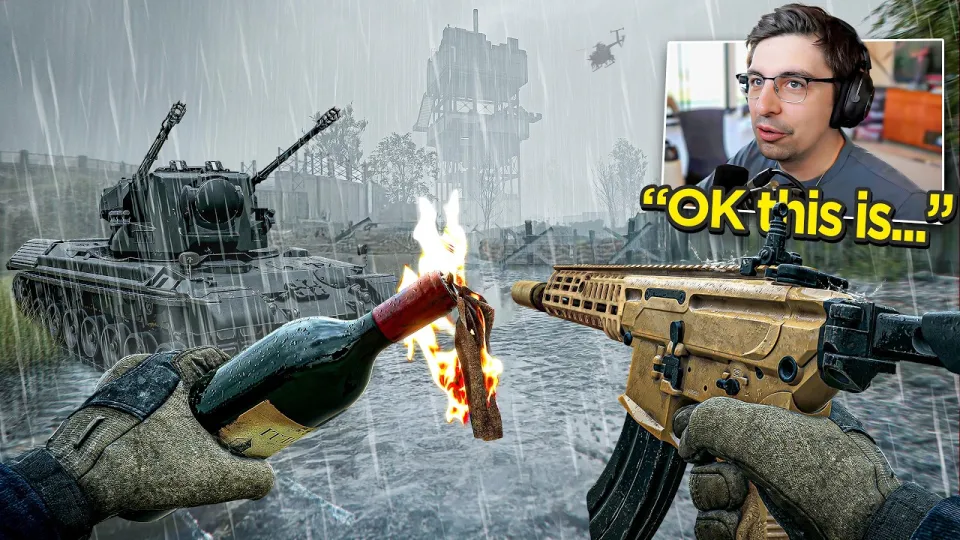
Video: Wardogs Is a Completely Different Game Now...
You can order the same kind of articles for your own video to boost it on YouTube and Google. Just message the Telegram bot @sat_sit_bot. Articles with your video embedded are written and posted by the bot itself — on popular topical sites (no ads). Your first 50 articles are free.
· based on the channel shroud
Key takeaways
- Season 2 of Wardogs adds rain as a live weather condition, not a cosmetic filter
- Visibility drops hard beyond roughly 190 meters, which guts long-range sniping
- HP ammo and leg shots become mandatory against armored targets
- Infrared goggles gain value in rain because thermal contrast survives the downpour
- Squads in one voice chat hold a real edge over larger groups of uncoordinated players
Wardogs with rain is the better version of the game because weather changes what every fight is actually about: visibility collapses past roughly 190 meters, sniping loses its comfort zone, and close-range trades with HP ammo decide who extracts. The rain arrived with Season 2, and the shift is big enough that streamers who play the game daily describe it as a different title — shroud's squad included. You can follow the channel's show audio through the Spotify show page if you want the commentary version of these raids.
The mechanics behind that claim are simple. Rain is a live condition on the map, it affects sightlines and audio, and it forces loadout decisions before the first contact. Below is a breakdown of what actually changes, where the new meta pushes players, and which habits from dry-weather Wardogs now get you killed.
What the rain actually changes in Wardogs
Rain in Wardogs is a systemic weather state that alters visibility, sound masking, and engagement distances across the whole map rather than a visual filter layered on top. Players report that targets become genuinely hard to identify even at medium ranges, with some engagements unreadable around the 190-meter mark — a distance that used to be routine rifle work.
Three effects matter most:
- Sightlines collapse. Long lanes and open approaches stop being free information. If you cannot confirm a silhouette at 190 meters, you cannot pre-aim a lane either.
- Audio gets muddier. Rain masks footsteps and reload sounds, so sound-based reads become less reliable and visual confirmation more important.
- Fights compress. Because nobody wants to trade at range in poor visibility, squads push into buildings, towers, and bridges where the fight is decided in seconds.
That compression is why the map feels new. Areas that were transit corridors in clear weather become contested objectives, and the fight for a single tower can absorb a whole raid cycle.
Why sniping lost its throne and what replaced it
The dedicated sniper role is the biggest loser of the rainy meta, because a scope does not fix a target you cannot see. Players who built their entire plan around holding a long angle now find themselves holding nothing — the same ridge that produced free kills in clear weather produces guesswork in a downpour.
What replaces it:
- Infrared and thermal optics. Thermal contrast survives rain far better than plain glass, so IR goggles move from a niche pick to a core item.
- Close-quarters weapons with high fire rate. SMGs and compact rifles thrive when engagements happen inside 50 meters.
- Shotguns and building clears. Stairs, ladders, and doorways become the real battlefield.
If you own IR optics, rain is your patch. If you main a bolt-action, either accept a support role or bring a backup that works indoors.
HP ammo and leg shots are no longer optional
Armor penetration through HP ammo aimed at legs is the single most repeated piece of advice in rainy Wardogs, and it is the difference between emptying a magazine and getting a kill. Armored targets absorb torso and head damage that would otherwise be lethal, so the reliable path is soft-target damage: legs first, then finish.
The failure mode is well documented in the community: a player is told to shoot legs, acknowledges it, then dumps a full mag into the torso and head, dies, and blames the weapon. That pattern is not a gun problem — it is a target-selection problem. Two habits fix it:
- Check your ammo type before the fight. If your weapon is loaded with standard rounds, you are gambling against armor.
- Aim at the legs by default against armored targets. It feels wrong after years of headshot discipline, and it still works.
Weapons like the PP-19 become far more valuable once you realize they can run HP rounds — a detail plenty of players miss entirely while complaining that their loadout is weak.
Squad coordination beats numbers in the storm
A 20-player group is not automatically stronger than a six-player squad, because coordination scales worse than headcount. Large groups rarely share one voice channel; they split into separate chats, callouts lag, and pushes desynchronize. A tight squad with shared comms can rotate, stack a building, and trade kills faster than a disorganized crowd can react.
This is why rain amplifies teamwork. With sightlines gone, information comes from teammates rather than from a scope, so the squad that talks clearly wins fights it should lose on paper. Practical rules:
- Keep one comms channel for the whole squad during pushes; separate chats for separate buildings is how flanks get missed.
- Call out what you see, not what you assume — rain makes assumptions expensive.
- Consolidate on one objective instead of spreading across three, because spread-out players cannot support each other through poor visibility.
Common mistakes players make in rainy lobbies
Most deaths in rain come from carrying dry-weather habits into a wet map, not from bad aim. The recurring errors are predictable and fixable.
- Looting mid-fight. Opening your inventory while falling from a ladder, with a shooter alive in the building, is a death sentence; repack magazines before you commit, not during a descent.
- Chasing a shooter into his own building without clearing. If someone shot you from inside, the first job is the angle, not the door.
- Ignoring health thresholds. Players call out "I'm 1 HP" at 10 HP and at 3 HP alike, which trains teammates to ignore the number. Report exact values so the squad knows whether you can hold.
- Blaming the gun. A weapon that feels bad against armor usually means the wrong ammo or the wrong aim point.
- Overvaluing long-range kits. Bringing a sniper-primary loadout into a downpour means one useful weapon slot instead of two.
Where the new weather leaves the game
Rain gives Wardogs room for a wider spread of viable playstyles, which is the healthiest thing a tactical shooter can do. Players who cannot win aim duels at range can win rotations, building clears, and ambushes; players who relied on a scope have to learn the map again. The trade-off is real — sniping feels gutted, and some players will resent losing that identity — but the fights themselves are more varied.
The practical summary: treat rain as a loadout constraint, not a nuisance. Pack IR optics, load HP ammo, plan for interiors, and keep your squad in one voice channel. Do that and the storm works for you instead of against you.
Useful links
- Spotify show page — audio show with the channel's sessions
- https://www.logitechg.com — Logitech G gear, promo code shroud
- https://maingear.com/shroud-ref — the reference PC build
- https://twitter.com/shroud — channel updates
- https://www.twitch.tv/shroud — live streams
Final thoughts on the rainy Wardogs meta
Rain is the most consequential change Wardogs has made to how fights are structured, because it removes the crutch of long sightlines and forces decisions on ammo, optics, and positioning. The players adapting fastest are not the best aimers but the ones who rebuild their loadouts around soft-target damage and close-quarters pressure. Sniping took a genuine hit, and that complaint is fair, but the trade is a wider set of viable strategies and more varied raids. The breakdown above comes from shroud's channel, where the squad's reactions to the storm are on full display — and if you want the audio companion to those sessions, the Spotify show page is where to start.
Source: Wardogs Is a Completely Different Game Now... · Markdown version
Questions & answers
Does rain in Wardogs actually change gameplay or is it just visual?
It changes gameplay. Visibility drops sharply at range, with some engagements unreadable around 190 meters, and rain masks audio cues like footsteps and reloads. That pushes fights indoors and makes close-range weapons and thermal optics far more valuable than long-range scopes.
Why do players say to shoot legs in Wardogs?
Armored targets absorb torso and head damage, so standard rounds often fail to secure a kill. HP ammo aimed at the legs deals reliable soft-target damage and lets you finish the target. Aiming at the torso out of habit is the most common reason a full magazine produces no kill.
Is sniping still viable in the rain?
Barely at long range. A scope does not solve a target you cannot identify, so dedicated sniper play loses most of its value in heavy rain. Sniping still works in clear windows and at shorter distances, but most players are better off bringing a close-quarters primary and IR optics.
Does a bigger squad win fights in Wardogs?
Not automatically. Large groups usually split across separate voice chats, so callouts lag and pushes desynchronize. A smaller squad in one channel that rotates and trades together typically beats a larger, uncoordinated group, especially when rain removes visual information.